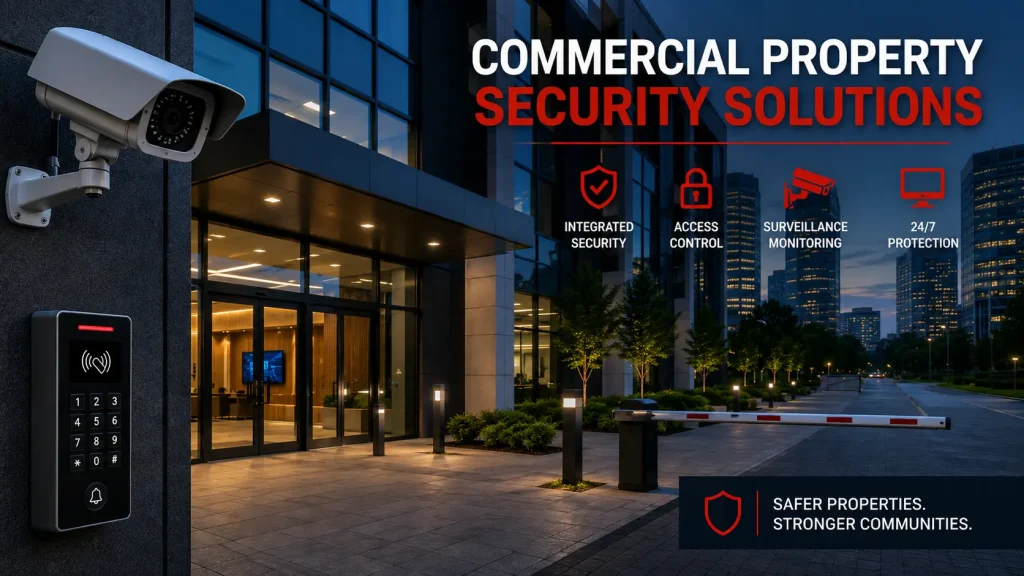
Commercial properties face a growing range of security challenges, from unauthorized access and property crime to operational disruptions and liability concerns. As buildings become more complex and tenant expectations continue to evolve, property owners and facility managers are increasingly looking for integrated security solutions that provide greater visibility, control, and responsiveness. A properly designed security ecosystem can help safeguard people, assets, and operations while supporting long-term business continuity.
In today’s evolving security landscape, organizations can no longer rely on standalone technologies or reactive security measures. Effective protection requires a coordinated approach that combines surveillance, access control, monitoring, reporting, and incident response into a unified security strategy. Whether managing an office tower, commercial plaza, mixed-use development, or corporate facility, integrated security systems provide the foundation for a safer and more resilient property.
“The most effective security programs are not built around a single technology or service. They are built around integration. When surveillance systems, access control, monitoring, and response procedures work together, property owners gain greater visibility, faster response capabilities, and stronger protection across their entire operation.”
Angelo, Project Coordinator, Pendant Security
As security risks continue to evolve, commercial property owners must adopt proactive strategies that improve situational awareness and strengthen operational control. Understanding how integrated security systems work together can help decision-makers reduce vulnerabilities, improve response times, and create safer environments for tenants, visitors, and employees.
Why Integrated Security Systems Are Becoming Essential for Commercial Properties
Commercial properties generate constant activity throughout the day. Employees, tenants, contractors, visitors, delivery personnel, and vendors move through facilities on a regular basis, creating numerous opportunities for security vulnerabilities if systems are not properly coordinated.
Explore the latest trends, expert advice, and innovative solutions in commercial security. Modern security programs are increasingly built around integrated technologies that provide centralized oversight and improved operational efficiency.
- Centralized security management across multiple systems
- Improved visibility through real-time monitoring
- Enhanced incident detection and response capabilities
- Reduced unauthorized access and security vulnerabilities
- Improved tenant, employee, and visitor safety
- Better reporting and operational accountability
Integrated security programs often incorporate technologies such as CCTV systems, access control platforms, visitor management software, remote monitoring solutions, and incident reporting tools. When combined with professional security procedures, these technologies create a more comprehensive security posture capable of addressing modern commercial risks.
The Role of Surveillance and Monitoring in Modern Property Security
Surveillance technology has evolved significantly over the past decade. Modern systems provide much more than recorded footage. Advanced monitoring platforms offer real-time visibility, intelligent analytics, remote access capabilities, and event-based alerts that help security personnel identify potential threats before they escalate.
Commercial property owners increasingly rely on integrated monitoring systems to oversee entrances, common areas, parking facilities, loading zones, elevators, and other critical areas throughout a property. This enhanced visibility allows security teams to quickly verify incidents, investigate suspicious activity, and coordinate response efforts with greater accuracy.
A key advantage of modern surveillance systems is their ability to support proactive security operations. Rather than waiting for incidents to occur, security personnel can use live monitoring and analytics to identify unusual behaviours, unauthorized access attempts, and operational anomalies in real time. This enables faster intervention and reduces the likelihood of property damage, theft, or safety incidents.
Integrated surveillance systems also provide valuable operational insights. Property managers can review activity patterns, assess traffic flow, identify recurring security concerns, and evaluate the effectiveness of existing security measures. These insights support informed decision-making and continuous improvement of security programs.
Organizations seeking to strengthen visibility and threat detection capabilities often benefit from dedicated Surveillance & Monitoring Systems services. By combining advanced technology with professional oversight, commercial properties can improve situational awareness while supporting safer daily operations.
Additionally, surveillance systems play a critical role in post-incident investigations. Recorded footage can assist with incident verification, liability management, insurance claims, law enforcement support, and internal investigations. This capability provides an additional layer of protection that extends beyond day-to-day monitoring activities.
As technology continues to advance, surveillance systems are becoming increasingly intelligent, scalable, and accessible. Commercial properties that invest in modern monitoring solutions position themselves to address both current and future security challenges more effectively.
How Access Control Strengthens Operational Security
While surveillance provides visibility, access control systems provide control. Together, these technologies form the foundation of an integrated commercial security strategy.
Access control systems help organizations determine who can enter specific areas, when access is permitted, and how access activity is monitored. Modern systems utilize credentials such as key cards, fobs, mobile devices, biometrics, and visitor management platforms to regulate movement throughout a facility.
For commercial properties, controlling access is critical to reducing unauthorized entry, protecting sensitive areas, and maintaining accountability. Access control systems create detailed audit trails that document entry and exit activity, providing valuable information during security reviews and incident investigations.
Integrated access control platforms also improve operational efficiency. Property managers can grant, modify, or revoke access permissions remotely while maintaining centralized oversight across multiple locations. This flexibility is particularly valuable for organizations managing large portfolios, mixed-use developments, or properties with multiple tenants.
Beyond physical security, access control supports compliance, risk management, and emergency preparedness. In the event of a security incident, organizations can quickly identify affected areas, verify occupancy, and support coordinated response efforts.
Organizations looking to modernize facility security often implement comprehensive Access Control & Security Automation solutions to improve accountability, strengthen access management procedures, and support long-term operational objectives.
When integrated with surveillance systems, access control technologies provide even greater value. Security personnel can correlate access events with video footage, verify incidents more efficiently, and maintain greater visibility over property activity. This level of integration significantly enhances both security effectiveness and operational control.
As commercial properties continue to evolve, access control systems remain one of the most effective tools for managing risk while supporting business operations.
Building a Layered Security Strategy for Long-Term Protection
One of the most common mistakes organizations make is treating security technologies as standalone solutions. Cameras alone cannot stop unauthorized access. Access control systems alone cannot provide complete situational awareness. Security effectiveness improves when technologies, procedures, and personnel work together as part of a broader security strategy.
A layered security approach combines multiple protective measures to address vulnerabilities from different angles. Surveillance systems provide visibility. Access control systems regulate movement. Monitoring services support real-time oversight. Security personnel provide physical presence and incident response capabilities. Together, these elements create a stronger and more resilient security environment.
Commercial property owners should begin by conducting a comprehensive assessment of their facility, operational requirements, access points, tenant activity, and threat exposure. This assessment helps identify vulnerabilities and determine the most appropriate combination of technologies and procedures.
Integrated security planning also supports scalability. As properties grow, tenant requirements change, or new technologies become available, organizations can expand and adapt their security infrastructure without rebuilding systems from scratch. This flexibility helps maximize long-term value while maintaining consistent protection.
Industry guidance from the Canadian Centre for Occupational Health and Safety (CCOHS) highlights the importance of risk assessment, hazard identification, and proactive safety planning as part of broader organizational security and risk management efforts.
Ultimately, effective security is not achieved through a single device, platform, or service. It is achieved through coordination. By integrating surveillance, access control, monitoring, and operational procedures, commercial property owners can reduce risk, improve response capabilities, and create safer environments for everyone who uses their facilities.
Every commercial property faces unique security challenges. Whether you manage an office building, commercial plaza, mixed-use development, or corporate facility, a properly integrated security program can help reduce risk, improve visibility, and support long-term operational success.
If you’re evaluating ways to strengthen your property’s security infrastructure, the team at Pendant Security can help assess your current environment and identify opportunities to improve surveillance, access management, monitoring, and overall security performance. Contact us today to discuss a customized security strategy tailored to your property’s needs.